Stan książek
Nasze książki są dokładnie sprawdzone i jasno określamy stan każdej z nich.


Nowa
Książka nowa.
Używany - jak nowa
Niezauważalne lub prawie niezauważalne ślady używania. Książkę ciężko odróżnić od nowej pozycji.
Używany - dobry
Normalne ślady używania wynikające z kartkowania podczas czytania, brak większych uszkodzeń lub zagięć.
Używany - widoczne ślady użytkowania
zagięte rogi, przyniszczona okładka, książka posiada wszystkie strony.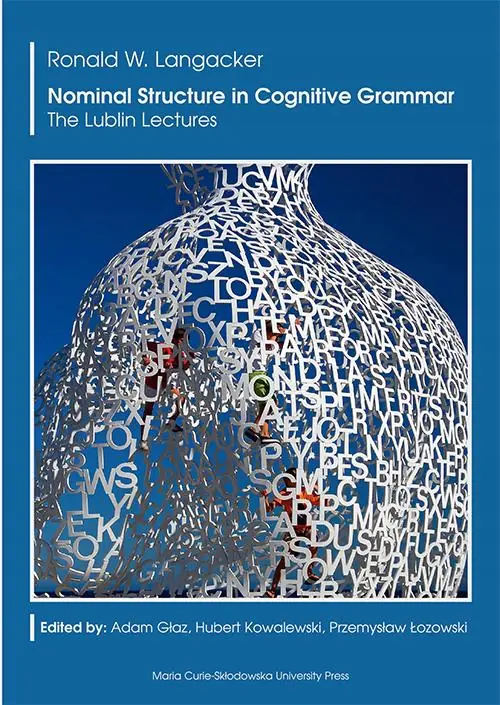
Nominal Structure in Cognitive Grammar. The Lublin Lectures
Masz tę lub inne książki?
Sprzedaj je u nas

Nearly thirty years after the initial release of the influential "Foundations of Cognitive Grammar" (vol. 1, 1987), Ronald W. Langacker's innovative framework for understanding language from a cognitive perspective continues to thrive. Over the years, the key descriptive constructs have been presented to the linguistic community and employed in various analyses of language data. Cognitive Grammar remains a field of dynamic exploration, exhibiting growing precision. This particular volume draws from a series of lectures Langacker delivered at UMCS in Lublin, Poland, in May 2014, focusing on the nature of nominal structures. The author provides an extensive and detailed explanation of the interplay between nominals and cognitive processes, illustrating how individuals conceptualize and symbolize their experiences linguistically.
Wybierz stan zużycia:
WIĘCEJ O SKALI
Nearly thirty years after the initial release of the influential "Foundations of Cognitive Grammar" (vol. 1, 1987), Ronald W. Langacker's innovative framework for understanding language from a cognitive perspective continues to thrive. Over the years, the key descriptive constructs have been presented to the linguistic community and employed in various analyses of language data. Cognitive Grammar remains a field of dynamic exploration, exhibiting growing precision. This particular volume draws from a series of lectures Langacker delivered at UMCS in Lublin, Poland, in May 2014, focusing on the nature of nominal structures. The author provides an extensive and detailed explanation of the interplay between nominals and cognitive processes, illustrating how individuals conceptualize and symbolize their experiences linguistically.
Szczegóły
Inne książki: Ronald W. Langacker

Podobne produkty
Może Ci się spodobać
Inne książki z tej samej kategorii

Napisz opinię o książce i wygraj nagrodę!
W każdym miesiącu wybieramy najlepsze opinie i nagradzamy recenzentów.
Dowiedz się więcejWartość nagród w tym miesiącu
880 zł
Dodaj swoją opinię
Zaloguj się na swoje konto, aby mieć możliwość dodawania opinii.
Czy chcesz zostawić tylko ocenę?
Dodanie samej oceny o książce nie jest brane pod uwagę podczas losowania nagród. By mieć szansę na otrzymanie nagrody musisz napisać opinię o książce.
Już oceniłeś/zrecenzowałeś te książkę w przeszłości.
Możliwe jest dodanie tylko jednej recenzji do każdej z książek.
Sposoby dostawy
Odbiór w punkcie (7)
InPost Paczkomat 24/7

14,99 zł
DPD Pickup Automaty i Punkty Odbioru

10,49 zł





Dostawa na adres (7)
GLS U Ciebie - Kurier

14,99 zł
Kurier DPD

14,99 zł





Sposoby płatności
Płatność z góry
Przedpłata

Zwykły przelew
