Stan książek
Nasze książki są dokładnie sprawdzone i jasno określamy stan każdej z nich.


Nowa
Książka nowa.
Używany - jak nowa
Niezauważalne lub prawie niezauważalne ślady używania. Książkę ciężko odróżnić od nowej pozycji.
Używany - dobry
Normalne ślady używania wynikające z kartkowania podczas czytania, brak większych uszkodzeń lub zagięć.
Używany - widoczne ślady użytkowania
zagięte rogi, przyniszczona okładka, książka posiada wszystkie strony.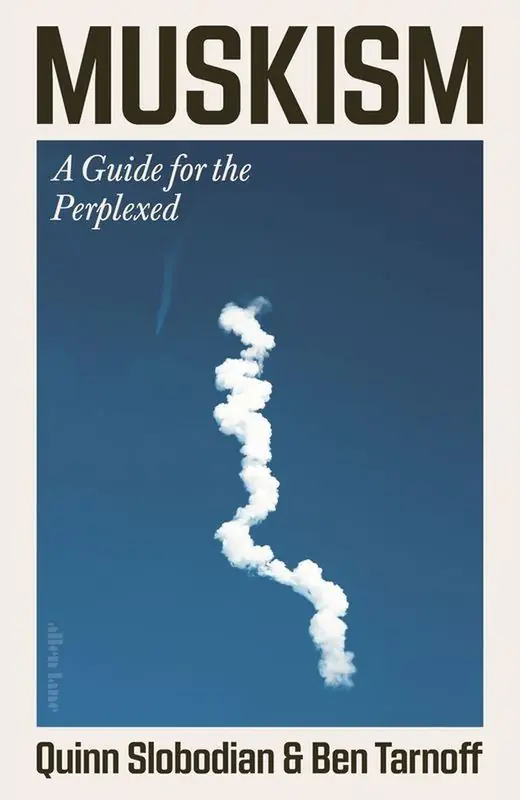
Muskism
Masz tę lub inne książki?
Sprzedaj je u nas

Elon Musk is often at the center of media attention, sparking debates about whether he is a hero, a villain, or oscillates between these roles. The public discourse largely focuses on Musk as an individual, but the authors argue for a different perspective. They propose the concept of "Muskism," which encapsulates a broader ideology in today's postliberal era. Unlike a fixed set of beliefs that Musk might hold, his actions are more akin to a continuous improvisation. Historical parallels can be drawn with figures like Henry Ford, who similarly influenced modern thought without explicitly defining it.Authors Quinn Slobodian and Ben Tarnoff delve into Musk's journey from South Africa to the forefront of technology in Silicon Valley with companies like SpaceX and ventures like DOGE. They identify patterns and methods that reflect the pressing issues in today's world. Muskism, they suggest, capitalizes on crises and emergencies to push for a future that is less human-centric. It envisions a reality where humans are increasingly intertwined with machines, especially through platforms like social media and video games. This ideology elevates technocrats, leveraging state mechanisms to establish dominance and suggests that only a select few are worthy of salvation. The underlying warning of the book is stark: engaging with this worldview may mean working tirelessly under the influence of a single individual. While the potential benefits of embracing Muskism could be immense, ignoring it might lead to dire consequences.
Wybierz stan zużycia:
WIĘCEJ O SKALI
Elon Musk is often at the center of media attention, sparking debates about whether he is a hero, a villain, or oscillates between these roles. The public discourse largely focuses on Musk as an individual, but the authors argue for a different perspective. They propose the concept of "Muskism," which encapsulates a broader ideology in today's postliberal era. Unlike a fixed set of beliefs that Musk might hold, his actions are more akin to a continuous improvisation. Historical parallels can be drawn with figures like Henry Ford, who similarly influenced modern thought without explicitly defining it.Authors Quinn Slobodian and Ben Tarnoff delve into Musk's journey from South Africa to the forefront of technology in Silicon Valley with companies like SpaceX and ventures like DOGE. They identify patterns and methods that reflect the pressing issues in today's world. Muskism, they suggest, capitalizes on crises and emergencies to push for a future that is less human-centric. It envisions a reality where humans are increasingly intertwined with machines, especially through platforms like social media and video games. This ideology elevates technocrats, leveraging state mechanisms to establish dominance and suggests that only a select few are worthy of salvation. The underlying warning of the book is stark: engaging with this worldview may mean working tirelessly under the influence of a single individual. While the potential benefits of embracing Muskism could be immense, ignoring it might lead to dire consequences.
Szczegóły
Inne książki tych autorów

Podobne produkty
Może Ci się spodobać
Inne książki z tej samej kategorii

Napisz opinię o książce i wygraj nagrodę!
W każdym miesiącu wybieramy najlepsze opinie i nagradzamy recenzentów.
Dowiedz się więcejWartość nagród w tym miesiącu
880 zł
Dodaj swoją opinię
Zaloguj się na swoje konto, aby mieć możliwość dodawania opinii.
Czy chcesz zostawić tylko ocenę?
Dodanie samej oceny o książce nie jest brane pod uwagę podczas losowania nagród. By mieć szansę na otrzymanie nagrody musisz napisać opinię o książce.
Już oceniłeś/zrecenzowałeś te książkę w przeszłości.
Możliwe jest dodanie tylko jednej recenzji do każdej z książek.
Sposoby dostawy
Odbiór w punkcie (7)
InPost Paczkomat 24/7

14,99 zł
DPD Pickup Automaty i Punkty Odbioru

10,49 zł





Dostawa na adres (7)
GLS U Ciebie - Kurier

14,99 zł
Kurier DPD

14,99 zł





Sposoby płatności
Płatność z góry
Przedpłata

Zwykły przelew
