Stan książek
Nasze książki są dokładnie sprawdzone i jasno określamy stan każdej z nich.


Nowa
Książka nowa.
Używany - jak nowa
Niezauważalne lub prawie niezauważalne ślady używania. Książkę ciężko odróżnić od nowej pozycji.
Używany - dobry
Normalne ślady używania wynikające z kartkowania podczas czytania, brak większych uszkodzeń lub zagięć.
Używany - widoczne ślady użytkowania
zagięte rogi, przyniszczona okładka, książka posiada wszystkie strony.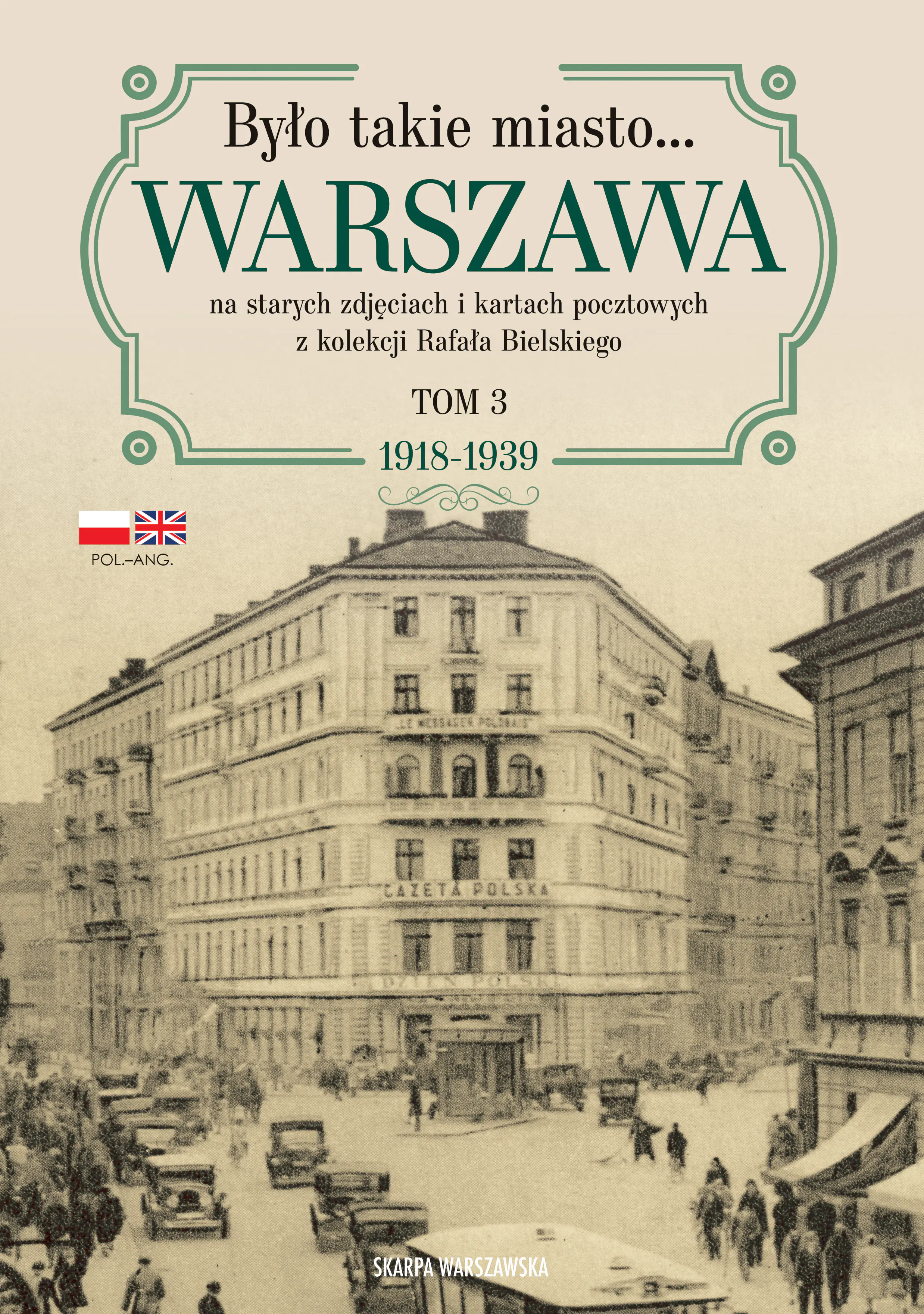
Było takie miasto… Warszawa na starych zdjęciach i kartach pocztowych z kolekcji Rafała Bielskiego.
Masz tę lub inne książki?
Sprzedaj je u nas

Rafał Bielski, known for his extensive collection of Warsaw photographs, postcards, and maps, extends an invitation for a journey through the streets of Warsaw as it was between the World Wars. This walk takes you from the period of the city's derussification and the defense efforts of 1920, through to the grand patriotic celebrations, the repatriation of Henryk Sienkiewicz’s remains, and the May Coup of 1926, culminating in the ambitious urban projects championed by Stefan Starzyński. Bielski’s goal is to let the voices of those who experienced the 1920s and 1930s tell the story of the city’s history, using quotes from period guidebooks to add depth to descriptions of the cityscape, including its streets, parks, and monuments. This approach enriches the album, offering it the aura of an exclusive guide to bygone times. Moreover, the album contains a reproduction of the “Greater Warsaw” map from 1930, crafted by the distinguished W. Cukrzyński printing house, adding an authentic touch to this historical exploration.
Wybierz stan zużycia:
WIĘCEJ O SKALI
Rafał Bielski, known for his extensive collection of Warsaw photographs, postcards, and maps, extends an invitation for a journey through the streets of Warsaw as it was between the World Wars. This walk takes you from the period of the city's derussification and the defense efforts of 1920, through to the grand patriotic celebrations, the repatriation of Henryk Sienkiewicz’s remains, and the May Coup of 1926, culminating in the ambitious urban projects championed by Stefan Starzyński. Bielski’s goal is to let the voices of those who experienced the 1920s and 1930s tell the story of the city’s history, using quotes from period guidebooks to add depth to descriptions of the cityscape, including its streets, parks, and monuments. This approach enriches the album, offering it the aura of an exclusive guide to bygone times. Moreover, the album contains a reproduction of the “Greater Warsaw” map from 1930, crafted by the distinguished W. Cukrzyński printing house, adding an authentic touch to this historical exploration.
Szczegóły
Inne książki: Rafał Bielski

Podobne produkty
Może Ci się spodobać
Inne książki z tej samej kategorii

Napisz opinię o książce i wygraj nagrodę!
W każdym miesiącu wybieramy najlepsze opinie i nagradzamy recenzentów.
Dowiedz się więcejWartość nagród w tym miesiącu
880 zł
Dodaj swoją opinię
Zaloguj się na swoje konto, aby mieć możliwość dodawania opinii.
Czy chcesz zostawić tylko ocenę?
Dodanie samej oceny o książce nie jest brane pod uwagę podczas losowania nagród. By mieć szansę na otrzymanie nagrody musisz napisać opinię o książce.
Już oceniłeś/zrecenzowałeś te książkę w przeszłości.
Możliwe jest dodanie tylko jednej recenzji do każdej z książek.
Sposoby dostawy
Odbiór w punkcie (7)
InPost Paczkomat 24/7

14,99 zł
DPD Pickup Automaty i Punkty Odbioru

10,49 zł





Dostawa na adres (7)
GLS U Ciebie - Kurier

14,99 zł
Kurier DPD

14,99 zł





Sposoby płatności
Płatność z góry
Przedpłata

Zwykły przelew
