Stan książek
Nasze książki są dokładnie sprawdzone i jasno określamy stan każdej z nich.


Nowa
Książka nowa.
Używany - jak nowa
Niezauważalne lub prawie niezauważalne ślady używania. Książkę ciężko odróżnić od nowej pozycji.
Używany - dobry
Normalne ślady używania wynikające z kartkowania podczas czytania, brak większych uszkodzeń lub zagięć.
Używany - widoczne ślady użytkowania
zagięte rogi, przyniszczona okładka, książka posiada wszystkie strony.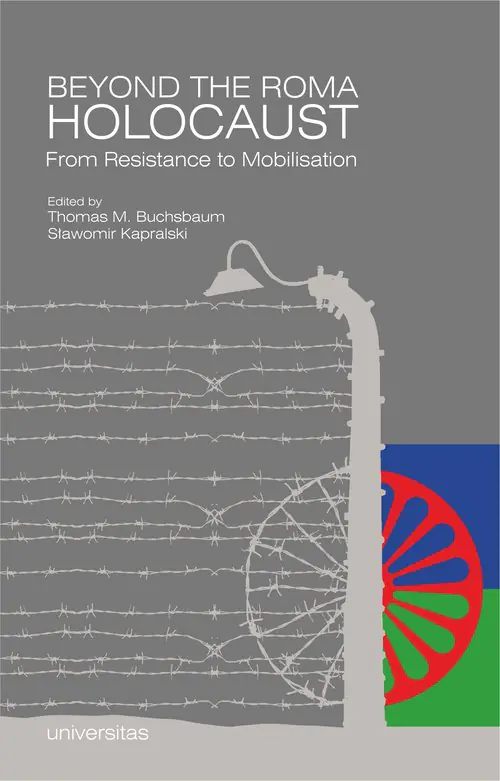
Beyond the Roma Holocaust From Resistance to Mobilisation
Masz tę lub inne książki?
Sprzedaj je u nas

The book at hand is inspired by the international symposium "Beyond the Roma Holocaust: From Resistance to Mobilisation," which took place in Cracow on October 21-22, 2016. This event was organized to commemorate the 75th anniversary of the tragic deportation of half of the Austrian Roma and Sinti populations to the Nazi-controlled ghetto in Łódź. Following the horrific liquidation of the Zigeunerlager Litzmannstadt, many of these individuals, approximately 4300, faced brutal killings in gas vans at the extermination camp of Kulmhof in Chełmno nad Nerem.The contributors to this publication, hailing from diverse countries and backgrounds, delve into the complex history and origins of the Roma genocide while reflecting on its implications for contemporary Roma communities across Europe. The discussion extends beyond mere victimization by exploring the Roma's resistance and survival strategies during their persecution under Nazi terror. The narrative also examines the immediate and enduring effects of the Holocaust on the political mobilization of European Roma. It assesses how these historical experiences continue to shape the identities of Roma today and highlights the essential role of historical memory in fostering the Roma movement. As co-editor Thomas M. Buchsbaum notes, "The porrajmos cannot be altered retroactively, but probably can serve as a useful point of reference and departure in order to look to the future of Roma in our common Europe."The contents of the book encompass various perspectives, including an introduction by Adam Bodnar on the importance of remembering the Roma Holocaust and insights from Romani Rose on the civil rights struggles of German Sinti and Roma. Topics such as the post-Holocaust condition of Roma communities, contributions from Oliver von Mengersen, and analyses by Elena Marushiakova and Vesselin Popov on the reinterpretation of Roma history are thoroughly explored. Additional discussions cover the significance of regional governance in commemoration efforts, addressed by Stanislaw Sorys, and the experience of the Roma Holocaust in Croatia, as expressed by Danijel Vojak.Further, the book delves into contemporary themes of Roma political mobilization, with Thomas Acton analyzing historical cycles of forgetfulness, and Márton Rövid providing insights on the "refugee crisis" and its impact on Roma representations. An appendix includes speeches by Austrian Ambassador Dr. Thomas M. Buchsbaum during memorial events, complementing the comprehensive biographies of the authors contributing to this important publication.
Wybierz stan zużycia:
WIĘCEJ O SKALI
The book at hand is inspired by the international symposium "Beyond the Roma Holocaust: From Resistance to Mobilisation," which took place in Cracow on October 21-22, 2016. This event was organized to commemorate the 75th anniversary of the tragic deportation of half of the Austrian Roma and Sinti populations to the Nazi-controlled ghetto in Łódź. Following the horrific liquidation of the Zigeunerlager Litzmannstadt, many of these individuals, approximately 4300, faced brutal killings in gas vans at the extermination camp of Kulmhof in Chełmno nad Nerem.The contributors to this publication, hailing from diverse countries and backgrounds, delve into the complex history and origins of the Roma genocide while reflecting on its implications for contemporary Roma communities across Europe. The discussion extends beyond mere victimization by exploring the Roma's resistance and survival strategies during their persecution under Nazi terror. The narrative also examines the immediate and enduring effects of the Holocaust on the political mobilization of European Roma. It assesses how these historical experiences continue to shape the identities of Roma today and highlights the essential role of historical memory in fostering the Roma movement. As co-editor Thomas M. Buchsbaum notes, "The porrajmos cannot be altered retroactively, but probably can serve as a useful point of reference and departure in order to look to the future of Roma in our common Europe."The contents of the book encompass various perspectives, including an introduction by Adam Bodnar on the importance of remembering the Roma Holocaust and insights from Romani Rose on the civil rights struggles of German Sinti and Roma. Topics such as the post-Holocaust condition of Roma communities, contributions from Oliver von Mengersen, and analyses by Elena Marushiakova and Vesselin Popov on the reinterpretation of Roma history are thoroughly explored. Additional discussions cover the significance of regional governance in commemoration efforts, addressed by Stanislaw Sorys, and the experience of the Roma Holocaust in Croatia, as expressed by Danijel Vojak.Further, the book delves into contemporary themes of Roma political mobilization, with Thomas Acton analyzing historical cycles of forgetfulness, and Márton Rövid providing insights on the "refugee crisis" and its impact on Roma representations. An appendix includes speeches by Austrian Ambassador Dr. Thomas M. Buchsbaum during memorial events, complementing the comprehensive biographies of the authors contributing to this important publication.
Szczegóły
Inne książki tych autorów

Podobne produkty
Może Ci się spodobać
Inne książki z tej samej kategorii

Napisz opinię o książce i wygraj nagrodę!
W każdym miesiącu wybieramy najlepsze opinie i nagradzamy recenzentów.
Dowiedz się więcejWartość nagród w tym miesiącu
880 zł
Dodaj swoją opinię
Zaloguj się na swoje konto, aby mieć możliwość dodawania opinii.
Czy chcesz zostawić tylko ocenę?
Dodanie samej oceny o książce nie jest brane pod uwagę podczas losowania nagród. By mieć szansę na otrzymanie nagrody musisz napisać opinię o książce.
Już oceniłeś/zrecenzowałeś te książkę w przeszłości.
Możliwe jest dodanie tylko jednej recenzji do każdej z książek.
Sposoby dostawy
Odbiór w punkcie (7)
InPost Paczkomat 24/7

14,99 zł
DPD Pickup Automaty i Punkty Odbioru

11,99 zł





Dostawa na adres (7)
GLS U Ciebie - Kurier

14,99 zł
Kurier DPD

14,99 zł





Sposoby płatności
Płatność z góry
Przedpłata

Zwykły przelew
