Stan książek
Nasze książki są dokładnie sprawdzone i jasno określamy stan każdej z nich.


Nowa
Książka nowa.
Używany - jak nowa
Niezauważalne lub prawie niezauważalne ślady używania. Książkę ciężko odróżnić od nowej pozycji.
Używany - dobry
Normalne ślady używania wynikające z kartkowania podczas czytania, brak większych uszkodzeń lub zagięć.
Używany - widoczne ślady użytkowania
zagięte rogi, przyniszczona okładka, książka posiada wszystkie strony.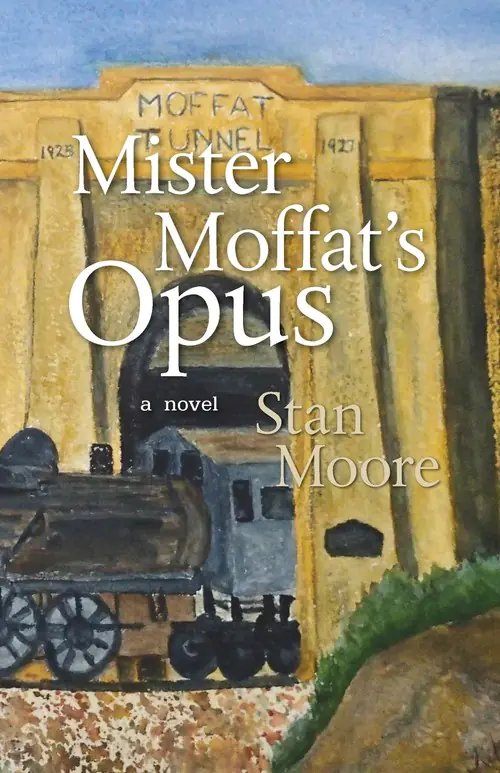
Mister Moffat's Opus
Masz tę lub inne książki?
Sprzedaj je u nas

In the 1920s, America was experiencing a period of rapid growth and innovation, where new concepts and inventions seemed to emerge almost every day. It was a time filled with optimism and endless possibilities. However, there were significant obstacles to overcome. One of the most daunting was running trains over Rollins Pass, the highest railroad route in North America, which was both expensive and challenging, leading to the financial downfall of several railroads. In 1902, David Moffat envisioned a solution: constructing a tunnel beneath the continental divide. By the 1920s, this project had become essential.Visionaries like Charity Hovus, Cam Braun, and Dale Smertz, among others, spearheaded the tunnel's design and construction. They faced rare geological and hydrological challenges, necessitating the development of innovative techniques and technologies to complete the venture. Simultaneously, some individuals involved were creating and distributing novel, unregulated financial products.During this era, American wealth burgeoned, and many became fixated on accumulating riches. Mining was a significant activity, involving the extraction of minerals for manufacturing. Additionally, some individuals engaged in financial schemes, extracting money from investors for substantial profits.This narrative highlights how Colorado's residents collaborated to fund and construct a monumental infrastructure project and explores some of the unforeseen consequences of the time.
Wybierz stan zużycia:
WIĘCEJ O SKALI
In the 1920s, America was experiencing a period of rapid growth and innovation, where new concepts and inventions seemed to emerge almost every day. It was a time filled with optimism and endless possibilities. However, there were significant obstacles to overcome. One of the most daunting was running trains over Rollins Pass, the highest railroad route in North America, which was both expensive and challenging, leading to the financial downfall of several railroads. In 1902, David Moffat envisioned a solution: constructing a tunnel beneath the continental divide. By the 1920s, this project had become essential.Visionaries like Charity Hovus, Cam Braun, and Dale Smertz, among others, spearheaded the tunnel's design and construction. They faced rare geological and hydrological challenges, necessitating the development of innovative techniques and technologies to complete the venture. Simultaneously, some individuals involved were creating and distributing novel, unregulated financial products.During this era, American wealth burgeoned, and many became fixated on accumulating riches. Mining was a significant activity, involving the extraction of minerals for manufacturing. Additionally, some individuals engaged in financial schemes, extracting money from investors for substantial profits.This narrative highlights how Colorado's residents collaborated to fund and construct a monumental infrastructure project and explores some of the unforeseen consequences of the time.
Szczegóły
Inne książki: Moore Stan

Podobne produkty
Może Ci się spodobać
Inne książki z tej samej kategorii

Napisz opinię o książce i wygraj nagrodę!
W każdym miesiącu wybieramy najlepsze opinie i nagradzamy recenzentów.
Dowiedz się więcejWartość nagród w tym miesiącu
880 zł
Dodaj swoją opinię
Zaloguj się na swoje konto, aby mieć możliwość dodawania opinii.
Czy chcesz zostawić tylko ocenę?
Dodanie samej oceny o książce nie jest brane pod uwagę podczas losowania nagród. By mieć szansę na otrzymanie nagrody musisz napisać opinię o książce.
Już oceniłeś/zrecenzowałeś te książkę w przeszłości.
Możliwe jest dodanie tylko jednej recenzji do każdej z książek.
Sposoby dostawy
Odbiór w punkcie (7)
InPost Paczkomat 24/7

14,99 zł
DPD Pickup Automaty i Punkty Odbioru

10,49 zł





Dostawa na adres (7)
GLS U Ciebie - Kurier

14,99 zł
Kurier DPD

14,99 zł





Sposoby płatności
Płatność z góry
Przedpłata

Zwykły przelew
