Stan książek
Nasze książki są dokładnie sprawdzone i jasno określamy stan każdej z nich.


Nowa
Książka nowa.
Używany - jak nowa
Niezauważalne lub prawie niezauważalne ślady używania. Książkę ciężko odróżnić od nowej pozycji.
Używany - dobry
Normalne ślady używania wynikające z kartkowania podczas czytania, brak większych uszkodzeń lub zagięć.
Używany - widoczne ślady użytkowania
zagięte rogi, przyniszczona okładka, książka posiada wszystkie strony.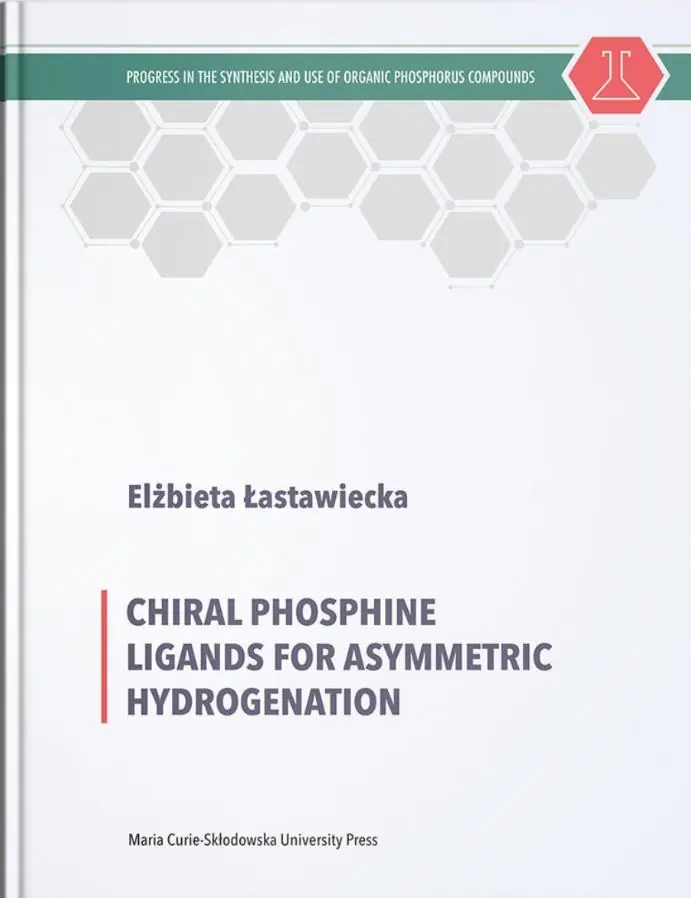
Chiral Phosphine Ligands for Asymmetric...
Masz tę lub inne książki?
Sprzedaj je u nas

This monograph offers an extensive exploration of the challenges and prospects associated with the application of phosphine ligands in stereoselective catalytic hydrogenation. The structural configuration of these compounds opens up a multitude of possibilities when it comes to selecting the type of chirality, as well as their potential modifications and substitutions. The goal is to create a unique structure capable of achieving maximum asymmetric induction under specific conditions. Deciding on these conditions involves an optimization process that runs concurrently with the development of the ligand's structure. The findings from these studies often stand out due to their scientific excellence, resulting from a series of iterative processes. These processes ultimately lead to the creation of methods that yield nearly enantiomerically pure products, which are frequently bioactive.
Wybierz stan zużycia:
WIĘCEJ O SKALI
This monograph offers an extensive exploration of the challenges and prospects associated with the application of phosphine ligands in stereoselective catalytic hydrogenation. The structural configuration of these compounds opens up a multitude of possibilities when it comes to selecting the type of chirality, as well as their potential modifications and substitutions. The goal is to create a unique structure capable of achieving maximum asymmetric induction under specific conditions. Deciding on these conditions involves an optimization process that runs concurrently with the development of the ligand's structure. The findings from these studies often stand out due to their scientific excellence, resulting from a series of iterative processes. These processes ultimately lead to the creation of methods that yield nearly enantiomerically pure products, which are frequently bioactive.
Szczegóły
Inne książki: Łastawiecka Elżbieta

Podobne produkty
Może Ci się spodobać
Inne książki z tej samej kategorii

Napisz opinię o książce i wygraj nagrodę!
W każdym miesiącu wybieramy najlepsze opinie i nagradzamy recenzentów.
Dowiedz się więcejWartość nagród w tym miesiącu
880 zł
Dodaj swoją opinię
Zaloguj się na swoje konto, aby mieć możliwość dodawania opinii.
Czy chcesz zostawić tylko ocenę?
Dodanie samej oceny o książce nie jest brane pod uwagę podczas losowania nagród. By mieć szansę na otrzymanie nagrody musisz napisać opinię o książce.
Już oceniłeś/zrecenzowałeś te książkę w przeszłości.
Możliwe jest dodanie tylko jednej recenzji do każdej z książek.
Sposoby dostawy
Odbiór w punkcie (6)
InPost Paczkomat 24/7

14,99 zł
DPD Pickup Automaty i Punkty Odbioru

10,49 zł




Dostawa na adres (7)
GLS U Ciebie - Kurier

14,99 zł
Kurier DPD

14,99 zł





Sposoby płatności
Płatność z góry
Przedpłata

Zwykły przelew
