Stan książek
Nasze książki są dokładnie sprawdzone i jasno określamy stan każdej z nich.


Nowa
Książka nowa.
Używany - jak nowa
Niezauważalne lub prawie niezauważalne ślady używania. Książkę ciężko odróżnić od nowej pozycji.
Używany - dobry
Normalne ślady używania wynikające z kartkowania podczas czytania, brak większych uszkodzeń lub zagięć.
Używany - widoczne ślady użytkowania
zagięte rogi, przyniszczona okładka, książka posiada wszystkie strony.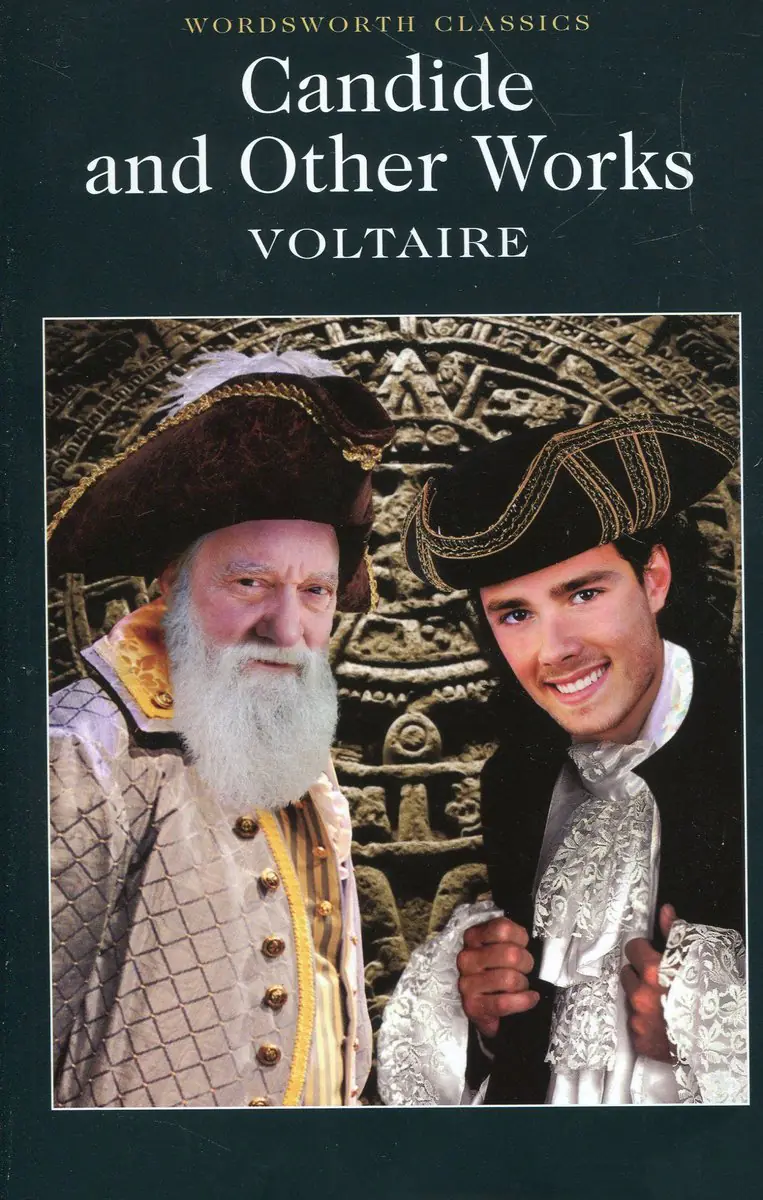
Candide and Other Works
Masz tę lub inne książki?
Sprzedaj je u nas

Voltaire is regarded as one of the top three French authors of the 18th century. Throughout his lifetime, he actively opposed religious intolerance, prejudice, and social injustice, and he is often credited as a key thinker who laid the groundwork for the French Revolution. This collection features several of his works: "Zadig" (1748), which tells the story of a young man ascending to the throne of Babylon; "Candide" (1759), Voltaire's most renowned narrative; and a newly translated version of "The Ingenu" (1767), where the protagonist, raised by Huron Indians, encounters European culture. The characters in these stories are youthful, attractive, gifted, and inexperienced. These tales are infused with Voltaire's sharp wit and critique of the ancien régime society. Additionally, the compilation concludes with a new translation of "Nanine," a three-act comedy by Voltaire, initially viewed as risky for its meritocratic message and later considered anti-revolutionary. In this play, the protagonist falls in love with a maid. The central question is whether he can defy societal biases to marry her.
Wybierz stan zużycia:
WIĘCEJ O SKALI
Voltaire is regarded as one of the top three French authors of the 18th century. Throughout his lifetime, he actively opposed religious intolerance, prejudice, and social injustice, and he is often credited as a key thinker who laid the groundwork for the French Revolution. This collection features several of his works: "Zadig" (1748), which tells the story of a young man ascending to the throne of Babylon; "Candide" (1759), Voltaire's most renowned narrative; and a newly translated version of "The Ingenu" (1767), where the protagonist, raised by Huron Indians, encounters European culture. The characters in these stories are youthful, attractive, gifted, and inexperienced. These tales are infused with Voltaire's sharp wit and critique of the ancien régime society. Additionally, the compilation concludes with a new translation of "Nanine," a three-act comedy by Voltaire, initially viewed as risky for its meritocratic message and later considered anti-revolutionary. In this play, the protagonist falls in love with a maid. The central question is whether he can defy societal biases to marry her.
Szczegóły
Inne książki: Voltaire

Podobne produkty
Może Ci się spodobać
Inne książki z tej samej kategorii

Napisz opinię o książce i wygraj nagrodę!
W każdym miesiącu wybieramy najlepsze opinie i nagradzamy recenzentów.
Dowiedz się więcejWartość nagród w tym miesiącu
880 zł
Dodaj swoją opinię
Zaloguj się na swoje konto, aby mieć możliwość dodawania opinii.
Czy chcesz zostawić tylko ocenę?
Dodanie samej oceny o książce nie jest brane pod uwagę podczas losowania nagród. By mieć szansę na otrzymanie nagrody musisz napisać opinię o książce.
Już oceniłeś/zrecenzowałeś te książkę w przeszłości.
Możliwe jest dodanie tylko jednej recenzji do każdej z książek.
Sposoby dostawy
Odbiór w punkcie (7)
InPost Paczkomat 24/7

14,99 zł
DPD Pickup Automaty i Punkty Odbioru

11,99 zł





Dostawa na adres (7)
GLS U Ciebie - Kurier

14,99 zł
Kurier DPD

14,99 zł





Sposoby płatności
Płatność z góry
Przedpłata

Zwykły przelew
