Stan książek
Nasze książki są dokładnie sprawdzone i jasno określamy stan każdej z nich.


Nowa
Książka nowa.
Używany - jak nowa
Niezauważalne lub prawie niezauważalne ślady używania. Książkę ciężko odróżnić od nowej pozycji.
Używany - dobry
Normalne ślady używania wynikające z kartkowania podczas czytania, brak większych uszkodzeń lub zagięć.
Używany - widoczne ślady użytkowania
zagięte rogi, przyniszczona okładka, książka posiada wszystkie strony.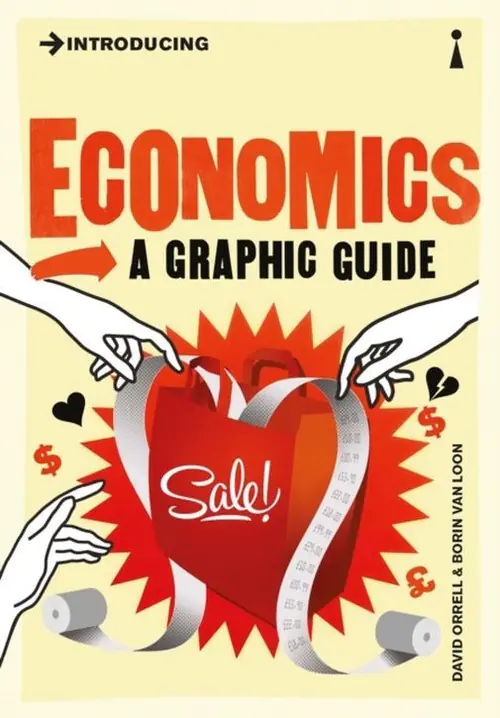
Introducing Economics
Masz tę lub inne książki?
Sprzedaj je u nas

David Orrell, known for his book "Economyths: 11 Ways Economics Gets It Wrong," offers a unique exploration of economics in a comic-book format, with artwork by Borin Van Loon. This publication is a part of the well-regarded Introducing Graphic Guide series. In contemporary times, economics appears to influence nearly every aspect of life, gaining notoriety as the 'dismal science.' Despite its popularity, the discipline faces criticism, especially after its shortcomings in foreseeing or averting recent financial downturns. This poses the question: what insights does economics really provide, and can it be considered a true science? Furthermore, in what ways can it impact our everyday lives? "Introducing Economics" embarks on a journey through the evolution of economic thought, starting from the ancient Greek philosophers up to modern discussions. Orrell and Van Loon highlight the substantial contributions of renowned economists like Adam Smith, Karl Marx, John Maynard Keynes, and Milton Friedman. Additionally, they explore fresh perspectives from emerging disciplines such as ecological economics and complexity economics that are reshaping traditional economic paradigms.
Wybierz stan zużycia:
WIĘCEJ O SKALI
David Orrell, known for his book "Economyths: 11 Ways Economics Gets It Wrong," offers a unique exploration of economics in a comic-book format, with artwork by Borin Van Loon. This publication is a part of the well-regarded Introducing Graphic Guide series. In contemporary times, economics appears to influence nearly every aspect of life, gaining notoriety as the 'dismal science.' Despite its popularity, the discipline faces criticism, especially after its shortcomings in foreseeing or averting recent financial downturns. This poses the question: what insights does economics really provide, and can it be considered a true science? Furthermore, in what ways can it impact our everyday lives? "Introducing Economics" embarks on a journey through the evolution of economic thought, starting from the ancient Greek philosophers up to modern discussions. Orrell and Van Loon highlight the substantial contributions of renowned economists like Adam Smith, Karl Marx, John Maynard Keynes, and Milton Friedman. Additionally, they explore fresh perspectives from emerging disciplines such as ecological economics and complexity economics that are reshaping traditional economic paradigms.
Szczegóły
Inne książki tych autorów

Podobne produkty
Może Ci się spodobać
Inne książki z tej samej kategorii

Napisz opinię o książce i wygraj nagrodę!
W każdym miesiącu wybieramy najlepsze opinie i nagradzamy recenzentów.
Dowiedz się więcejWartość nagród w tym miesiącu
880 zł
Dodaj swoją opinię
Zaloguj się na swoje konto, aby mieć możliwość dodawania opinii.
Czy chcesz zostawić tylko ocenę?
Dodanie samej oceny o książce nie jest brane pod uwagę podczas losowania nagród. By mieć szansę na otrzymanie nagrody musisz napisać opinię o książce.
Już oceniłeś/zrecenzowałeś te książkę w przeszłości.
Możliwe jest dodanie tylko jednej recenzji do każdej z książek.
Sposoby dostawy
Odbiór w punkcie (7)
InPost Paczkomat 24/7

14,99 zł
DPD Pickup Automaty i Punkty Odbioru

11,99 zł





Dostawa na adres (7)
GLS U Ciebie - Kurier

14,99 zł
Kurier DPD

14,99 zł





Sposoby płatności
Płatność z góry
Przedpłata

Zwykły przelew
