Stan książek
Nasze książki są dokładnie sprawdzone i jasno określamy stan każdej z nich.
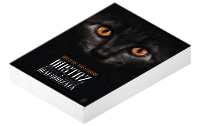

Nowa
Książka nowa.
Używany - jak nowa
Niezauważalne lub prawie niezauważalne ślady używania. Książkę ciężko odróżnić od nowej pozycji.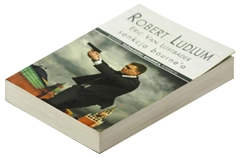
Używany - dobry
Normalne ślady używania wynikające z kartkowania podczas czytania, brak większych uszkodzeń lub zagięć.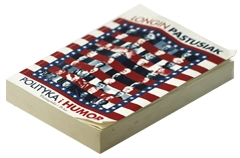
Używany - widoczne ślady użytkowania
zagięte rogi, przyniszczona okładka, książka posiada wszystkie strony.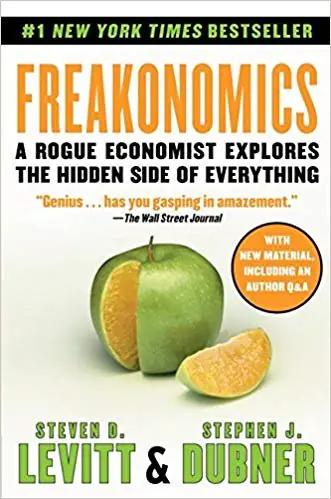
Freakonomics
Masz tę lub inne książki?
Sprzedaj je u nas

In the summer of 2003, Stephen J. Dubner, a writer and journalist, was tasked by the New York Times Magazine with profiling Steven D. Levitt, a celebrated young economist from the University of Chicago. Levitt's interests diverged significantly from those of most economists; he focused on unraveling the puzzles of everyday life, touching on topics such as cheating, crime, and parenting. His unconventional conclusions frequently challenged traditional beliefs. For example, he posited that the notable decline in crime rates in the 1990s was largely due to the legalization of abortion two decades earlier. He suggested that unwanted children were more likely to become criminals, so the significant number of abortions in the 1970s effectively diminished the future pool of potential criminals by the 1990s. The article about Levitt in the Times generated an overwhelming response, capturing the attention of many intrigued and, at times, unsettled readers. This response led Levitt and Dubner to collaborate on a book that dives deep into Levitt's fascinating ideas. Through engaging narratives and sharp insights, "FREAKONOMICS" illustrates that economics is fundamentally about incentives—understanding how people achieve their desires or needs, particularly when those desires or needs overlap with those of others. The book explores intriguing questions, such as: Which poses a greater risk, a gun or a swimming pool? Why do drug dealers, despite their earnings, often live with their mothers? What characteristics define an ideal parent? And intriguingly, what do schoolteachers and sumo wrestlers have in common? (The answer being that both are known to cheat.)
Wybierz stan zużycia:
WIĘCEJ O SKALI
In the summer of 2003, Stephen J. Dubner, a writer and journalist, was tasked by the New York Times Magazine with profiling Steven D. Levitt, a celebrated young economist from the University of Chicago. Levitt's interests diverged significantly from those of most economists; he focused on unraveling the puzzles of everyday life, touching on topics such as cheating, crime, and parenting. His unconventional conclusions frequently challenged traditional beliefs. For example, he posited that the notable decline in crime rates in the 1990s was largely due to the legalization of abortion two decades earlier. He suggested that unwanted children were more likely to become criminals, so the significant number of abortions in the 1970s effectively diminished the future pool of potential criminals by the 1990s. The article about Levitt in the Times generated an overwhelming response, capturing the attention of many intrigued and, at times, unsettled readers. This response led Levitt and Dubner to collaborate on a book that dives deep into Levitt's fascinating ideas. Through engaging narratives and sharp insights, "FREAKONOMICS" illustrates that economics is fundamentally about incentives—understanding how people achieve their desires or needs, particularly when those desires or needs overlap with those of others. The book explores intriguing questions, such as: Which poses a greater risk, a gun or a swimming pool? Why do drug dealers, despite their earnings, often live with their mothers? What characteristics define an ideal parent? And intriguingly, what do schoolteachers and sumo wrestlers have in common? (The answer being that both are known to cheat.)
Szczegóły
Dane producenta:
Inne książki: Steven D. Levitt

Podobne produkty
Może Ci się spodobać
Inne książki z tej samej kategorii

Napisz opinię o książce i wygraj nagrodę!
W każdym miesiącu wybieramy najlepsze opinie i nagradzamy recenzentów.
Dowiedz się więcejWartość nagród w tym miesiącu
880 zł
Dodaj swoją opinię
Zaloguj się na swoje konto, aby mieć możliwość dodawania opinii.
Czy chcesz zostawić tylko ocenę?
Dodanie samej oceny o książce nie jest brane pod uwagę podczas losowania nagród. By mieć szansę na otrzymanie nagrody musisz napisać opinię o książce.
Już oceniłeś/zrecenzowałeś te książkę w przeszłości.
Możliwe jest dodanie tylko jednej recenzji do każdej z książek.
Sposoby dostawy
Odbiór w punkcie (7)
InPost Paczkomat 24/7

14,99 zł
DPD Pickup Automaty i Punkty Odbioru

11,99 zł





Dostawa na adres (7)
GLS U Ciebie - Kurier

14,99 zł
Kurier DPD

14,99 zł





Sposoby płatności
Płatność z góry
Przedpłata

Zwykły przelew
