Stan książek
Nasze książki są dokładnie sprawdzone i jasno określamy stan każdej z nich.

Nowa
Książka nowa.
Używany - jak nowa
Niezauważalne lub prawie niezauważalne ślady używania. Książkę ciężko odróżnić od nowej pozycji.
Używany - dobry
Normalne ślady używania wynikające z kartkowania podczas czytania, brak większych uszkodzeń lub zagięć.
Używany - widoczne ślady użytkowania
zagięte rogi, przyniszczona okładka, książka posiada wszystkie strony.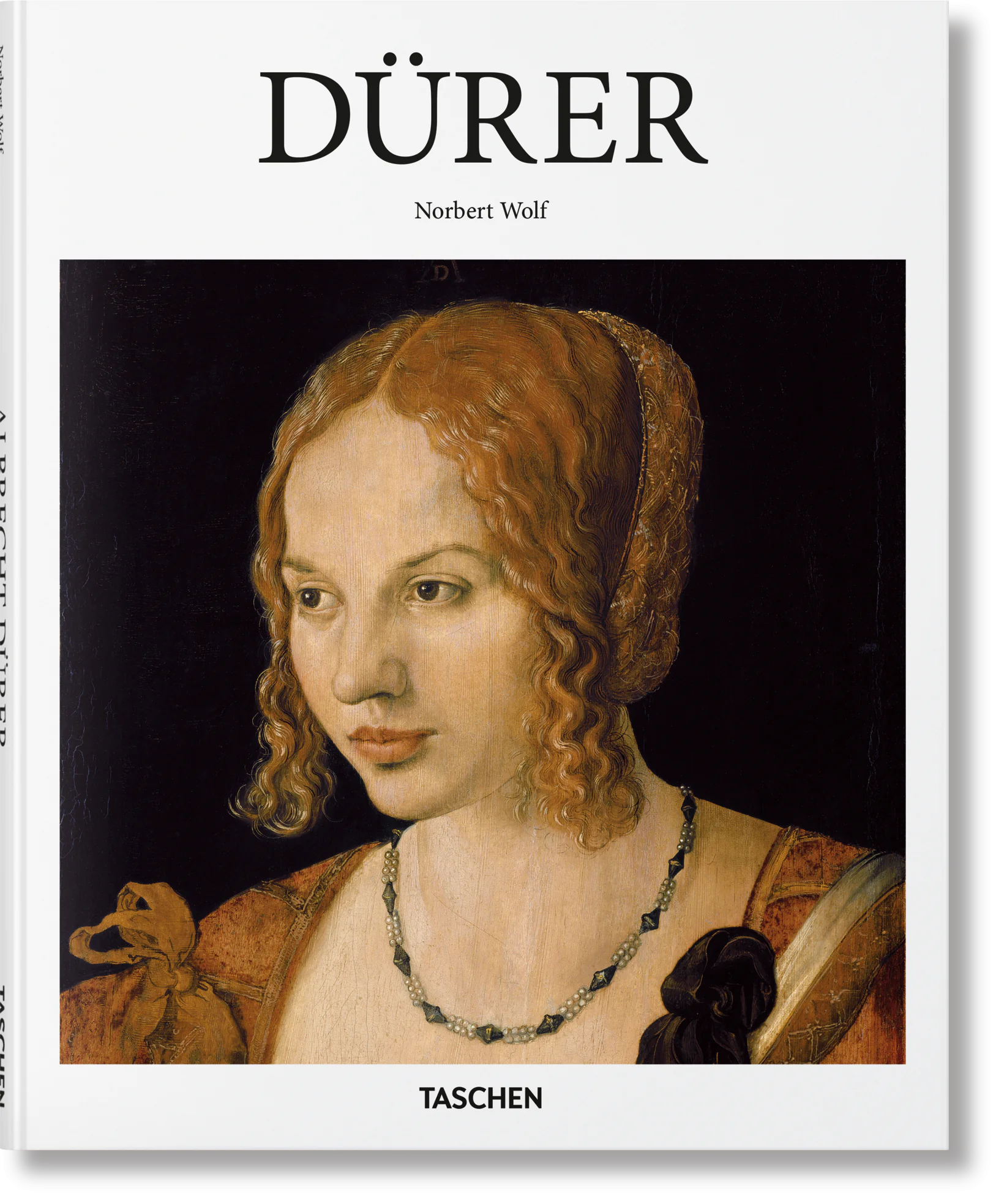
Durer
Masz tę lub inne książki?
Sprzedaj je u nas

A multifaceted genius of the German Renaissance, Albrecht Dürer (1471–1528) was an accomplished artist, theorist, and author whose diverse works spanned subjects from religious themes to art philosophy. His impressive corpus includes altarpieces, watercolors, portraits, and self-portraits, but he is most renowned for his extraordinary woodcut prints that revolutionized printmaking, elevating it to an art form of substantial significance. Dürer's woodcuts are noted for their remarkable scale and intricate detail, as seen in masterpieces like Apocalypse and the Triumphal Arch for Emperor Maximilian I. These works showcased intricately detailed, large-scale compositions that far surpassed any woodcuts produced before his time, achieving a new dimension of tonal and dynamic expression that conveyed deep conceptual, emotional, and spiritual depth. Dürer’s two seminal series of woodcuts on Christ’s Passion, distinguished by their size as The Large Passion and The Small Passion, are especially notable for their vivid and human depiction of the Christian narrative. In his copper engraving titled Melancholia I, Dürer depicted a profound vision of emotional despondency, often highlighted as an early representation of melancholia. An insatiable learner, Dürer drew inspiration not only from German masters and peers but also from Italian artists, and his influence radiated throughout Europe for many generations. This TASCHEN introduction delves into the pioneering endeavors of this extraordinary figure, examining his complex methodologies, his insatiable intellectual curiosity, and the seminal works that cemented his lasting influence.
Wybierz stan zużycia:
WIĘCEJ O SKALI
A multifaceted genius of the German Renaissance, Albrecht Dürer (1471–1528) was an accomplished artist, theorist, and author whose diverse works spanned subjects from religious themes to art philosophy. His impressive corpus includes altarpieces, watercolors, portraits, and self-portraits, but he is most renowned for his extraordinary woodcut prints that revolutionized printmaking, elevating it to an art form of substantial significance. Dürer's woodcuts are noted for their remarkable scale and intricate detail, as seen in masterpieces like Apocalypse and the Triumphal Arch for Emperor Maximilian I. These works showcased intricately detailed, large-scale compositions that far surpassed any woodcuts produced before his time, achieving a new dimension of tonal and dynamic expression that conveyed deep conceptual, emotional, and spiritual depth. Dürer’s two seminal series of woodcuts on Christ’s Passion, distinguished by their size as The Large Passion and The Small Passion, are especially notable for their vivid and human depiction of the Christian narrative. In his copper engraving titled Melancholia I, Dürer depicted a profound vision of emotional despondency, often highlighted as an early representation of melancholia. An insatiable learner, Dürer drew inspiration not only from German masters and peers but also from Italian artists, and his influence radiated throughout Europe for many generations. This TASCHEN introduction delves into the pioneering endeavors of this extraordinary figure, examining his complex methodologies, his insatiable intellectual curiosity, and the seminal works that cemented his lasting influence.
Szczegóły
Inne książki: Norbert Wolf

Podobne produkty
Może Ci się spodobać
Inne książki z tej samej kategorii

Napisz opinię o książce i wygraj nagrodę!
W każdym miesiącu wybieramy najlepsze opinie i nagradzamy recenzentów.
Dowiedz się więcejWartość nagród w tym miesiącu
880 zł
Dodaj swoją opinię
Zaloguj się na swoje konto, aby mieć możliwość dodawania opinii.
Czy chcesz zostawić tylko ocenę?
Dodanie samej oceny o książce nie jest brane pod uwagę podczas losowania nagród. By mieć szansę na otrzymanie nagrody musisz napisać opinię o książce.
Już oceniłeś/zrecenzowałeś te książkę w przeszłości.
Możliwe jest dodanie tylko jednej recenzji do każdej z książek.
Sposoby dostawy
Odbiór w punkcie (6)
InPost Paczkomat 24/7

13,99 zł
ORLEN Paczka

12,99 zł




Dostawa na adres (7)
GLS U Ciebie - Kurier

14,99 zł
Kurier DPD

14,99 zł





Sposoby płatności
Płatność z góry
Przedpłata

Zwykły przelew
