Stan książek
Nasze książki są dokładnie sprawdzone i jasno określamy stan każdej z nich.


Nowa
Książka nowa.
Używany - jak nowa
Niezauważalne lub prawie niezauważalne ślady używania. Książkę ciężko odróżnić od nowej pozycji.
Używany - dobry
Normalne ślady używania wynikające z kartkowania podczas czytania, brak większych uszkodzeń lub zagięć.
Używany - widoczne ślady użytkowania
zagięte rogi, przyniszczona okładka, książka posiada wszystkie strony.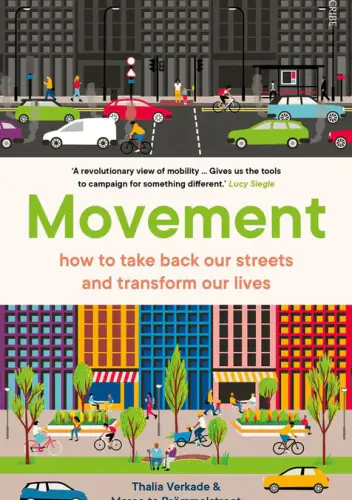
Movement: how to take back our streets and transform our lives (2022)
Masz tę lub inne książki?
Sprzedaj je u nas

Most of us assume that the streets surrounding our homes are merely thoroughfares for travel from one point to another. But what if we fundamentally reconsider the role these public spaces play in our lives? Could such a shift improve our daily existence? Our heavy reliance on automobiles not only harms our personal well-being but also contributes to environmental degradation. The Dutch offer a compelling model with their extensive network of bike highways. However, this still leaves questions about where pedestrians fit in or those who prefer a more relaxed pace of cycling. What provisions are made for children who wish to play on their doorsteps or for local wildlife that enriches our neighborhoods? Why is traffic flow often prioritized above all other considerations? To create communities that are safer, cleaner, and more environmentally friendly, we must start by reflecting on who owns our streets, how they are utilized, and who makes those decisions. Journalist Thalia Verkade, alongside urban mobility specialist Marco te Brömmelstroet, invites us to reconsider our underlying assumptions and to re-envision urban spaces with people at their core. Be prepared: this fresh perspective may permanently alter how you view the street outside your home.
Wybierz stan zużycia:
WIĘCEJ O SKALI
Most of us assume that the streets surrounding our homes are merely thoroughfares for travel from one point to another. But what if we fundamentally reconsider the role these public spaces play in our lives? Could such a shift improve our daily existence? Our heavy reliance on automobiles not only harms our personal well-being but also contributes to environmental degradation. The Dutch offer a compelling model with their extensive network of bike highways. However, this still leaves questions about where pedestrians fit in or those who prefer a more relaxed pace of cycling. What provisions are made for children who wish to play on their doorsteps or for local wildlife that enriches our neighborhoods? Why is traffic flow often prioritized above all other considerations? To create communities that are safer, cleaner, and more environmentally friendly, we must start by reflecting on who owns our streets, how they are utilized, and who makes those decisions. Journalist Thalia Verkade, alongside urban mobility specialist Marco te Brömmelstroet, invites us to reconsider our underlying assumptions and to re-envision urban spaces with people at their core. Be prepared: this fresh perspective may permanently alter how you view the street outside your home.
Szczegóły
Inne książki tych autorów

Podobne produkty
Może Ci się spodobać
Inne książki z tej samej kategorii

Napisz opinię o książce i wygraj nagrodę!
W każdym miesiącu wybieramy najlepsze opinie i nagradzamy recenzentów.
Dowiedz się więcejWartość nagród w tym miesiącu
880 zł
Dodaj swoją opinię
Zaloguj się na swoje konto, aby mieć możliwość dodawania opinii.
Czy chcesz zostawić tylko ocenę?
Dodanie samej oceny o książce nie jest brane pod uwagę podczas losowania nagród. By mieć szansę na otrzymanie nagrody musisz napisać opinię o książce.
Już oceniłeś/zrecenzowałeś te książkę w przeszłości.
Możliwe jest dodanie tylko jednej recenzji do każdej z książek.
Sposoby dostawy
Odbiór w punkcie (7)
InPost Paczkomat 24/7

14,99 zł
DPD Pickup Automaty i Punkty Odbioru

11,99 zł





Dostawa na adres (7)
GLS U Ciebie - Kurier

14,99 zł
Kurier DPD

14,99 zł





Sposoby płatności
Płatność z góry
Przedpłata

Zwykły przelew
