Stan książek
Nasze książki są dokładnie sprawdzone i jasno określamy stan każdej z nich.

Nowa
Książka nowa.
Używany - jak nowa
Niezauważalne lub prawie niezauważalne ślady używania. Książkę ciężko odróżnić od nowej pozycji.
Używany - dobry
Normalne ślady używania wynikające z kartkowania podczas czytania, brak większych uszkodzeń lub zagięć.
Używany - widoczne ślady użytkowania
zagięte rogi, przyniszczona okładka, książka posiada wszystkie strony.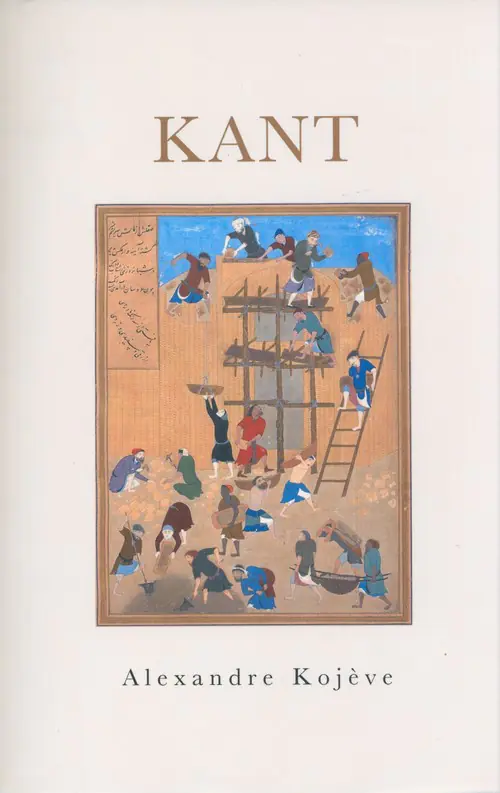
Kant wer. angielska
Masz tę lub inne książki?
Sprzedaj je u nas

In the early 1950s, Alexandre Kojeve revisited his comprehensive endeavor to align Kantian analytic reasoning with Hegelian logic and historical philosophy. One of Kojeve's major efforts focused on the parts Kant's critical philosophy that had been overlooked. Although the book was released in its raw, unaltered state in 1973, following the anti-Hegelian mood of the 1968 student uprisings, it has surprisingly remained somewhat obscure. Nevertheless, it has significantly impacted the various intellectual "returns" to Kant, influencing thinkers like Weil, Deleuze, Foucault, Tosel, and more.The text on Kant is both profound and thought-provoking, offering insights comparable to Kojeve's famed "Introduction to the Reading of Hegel." Kojeve contends that Kant's philosophical framework is troubled by the concept of the Thing-in-itself, which epitomizes 'bourgeois hypocrisy' through its split between practical action and theoretical discourse. He argues for a post-historical moral necessity to reject endless progress and to justify practically the ideas of God and the soul's immortality. In doing so, Kant elucidates the material prerequisites for revolutionary action against the backdrop of completed and remembered history.
Wybierz stan zużycia:
WIĘCEJ O SKALI
In the early 1950s, Alexandre Kojeve revisited his comprehensive endeavor to align Kantian analytic reasoning with Hegelian logic and historical philosophy. One of Kojeve's major efforts focused on the parts Kant's critical philosophy that had been overlooked. Although the book was released in its raw, unaltered state in 1973, following the anti-Hegelian mood of the 1968 student uprisings, it has surprisingly remained somewhat obscure. Nevertheless, it has significantly impacted the various intellectual "returns" to Kant, influencing thinkers like Weil, Deleuze, Foucault, Tosel, and more.The text on Kant is both profound and thought-provoking, offering insights comparable to Kojeve's famed "Introduction to the Reading of Hegel." Kojeve contends that Kant's philosophical framework is troubled by the concept of the Thing-in-itself, which epitomizes 'bourgeois hypocrisy' through its split between practical action and theoretical discourse. He argues for a post-historical moral necessity to reject endless progress and to justify practically the ideas of God and the soul's immortality. In doing so, Kant elucidates the material prerequisites for revolutionary action against the backdrop of completed and remembered history.
Szczegóły
Inne książki: Alexandre Kojève

Podobne produkty
Może Ci się spodobać
Inne książki z tej samej kategorii

Napisz opinię o książce i wygraj nagrodę!
W każdym miesiącu wybieramy najlepsze opinie i nagradzamy recenzentów.
Dowiedz się więcejWartość nagród w tym miesiącu
880 zł
Dodaj swoją opinię
Zaloguj się na swoje konto, aby mieć możliwość dodawania opinii.
Czy chcesz zostawić tylko ocenę?
Dodanie samej oceny o książce nie jest brane pod uwagę podczas losowania nagród. By mieć szansę na otrzymanie nagrody musisz napisać opinię o książce.
Już oceniłeś/zrecenzowałeś te książkę w przeszłości.
Możliwe jest dodanie tylko jednej recenzji do każdej z książek.
Sposoby dostawy
Odbiór w punkcie (7)
InPost Paczkomat 24/7

14,99 zł
DPD Pickup Automaty i Punkty Odbioru

10,49 zł





Dostawa na adres (7)
GLS U Ciebie - Kurier

14,99 zł
Kurier DPD

14,99 zł





Sposoby płatności
Płatność z góry
Przedpłata

Zwykły przelew
