Stan książek
Nasze książki są dokładnie sprawdzone i jasno określamy stan każdej z nich.


Nowa
Książka nowa.
Używany - jak nowa
Niezauważalne lub prawie niezauważalne ślady używania. Książkę ciężko odróżnić od nowej pozycji.
Używany - dobry
Normalne ślady używania wynikające z kartkowania podczas czytania, brak większych uszkodzeń lub zagięć.
Używany - widoczne ślady użytkowania
zagięte rogi, przyniszczona okładka, książka posiada wszystkie strony.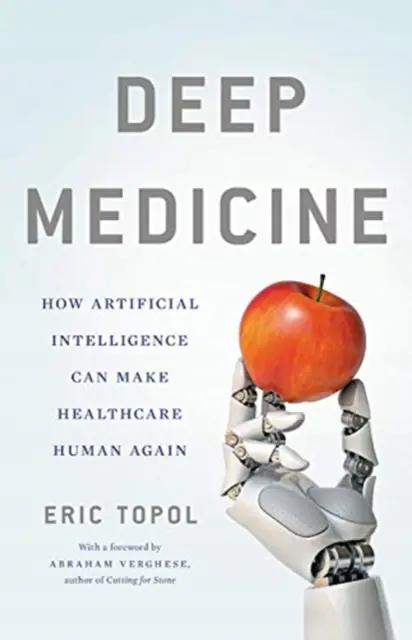
Deep Medicine: How Artificial Intelligence Can Make Healthcare Human Again
Masz tę lub inne książki?
Sprzedaj je u nas

In his compelling book "Deep Medicine: How Artificial Intelligence Can Make Healthcare Human Again," Eric Topol explores the transformative potential of artificial intelligence in the medical field. Often, medical appointments are rushed, leaving doctors with little opportunity to truly engage with a patient's narrative or thoroughly explain the various medical procedures and treatments they recommend. This rushed environment contributes to numerous errors, with misdiagnosis ranking as the fourth most common cause of death in the United States, behind heart disease, cancer, and stroke. Despite having an unprecedented array of resources available, physicians face immense pressure due to economic demands, distraction, burnout, information overload, and inherent biases, often leaving them feeling overwhelmed. Topol suggests that artificial intelligence offers a path forward. Technologies such as natural-language processing could automatically capture and document notes from doctor-patient interactions, while virtual psychiatric tools might more accurately assess suicide risk or mental health conditions in vulnerable populations. Additionally, deep learning software promises to enhance diagnostic accuracy for all doctors. Smartphone applications could even empower patients to conduct their own skin assessments and receive instant feedback. Moreover, modern virtual assistants like Alexa, Siri, and Cortana might analyze daily health data, potentially reducing the frequency of doctor and emergency room visits and providing ongoing support for individuals with chronic conditions like asthma, epilepsy, and heart disease. By incorporating these advanced tools into everyday medical practice, doctors could shift their focus away from administrative tasks and towards delivering comprehensive, personal care, something no machine could replicate. Furthermore, artificial intelligence stands to mitigate the spiraling costs of healthcare, benefiting both individuals and the broader economy. Currently, the healthcare industry consumes a staggering 20% of the gross domestic product in the United States, making it the largest sector in terms of financial and employment impact. With a total of 400 pages, the hardcover edition of this insightful book was published in 2019 by Basic Books, featuring illustrations and tables in black and white. The book's dimensions are 16.5 x 24.4 x 3.3 cm, and the ISBN is 9781541644632.
Wybierz stan zużycia:
WIĘCEJ O SKALI
In his compelling book "Deep Medicine: How Artificial Intelligence Can Make Healthcare Human Again," Eric Topol explores the transformative potential of artificial intelligence in the medical field. Often, medical appointments are rushed, leaving doctors with little opportunity to truly engage with a patient's narrative or thoroughly explain the various medical procedures and treatments they recommend. This rushed environment contributes to numerous errors, with misdiagnosis ranking as the fourth most common cause of death in the United States, behind heart disease, cancer, and stroke. Despite having an unprecedented array of resources available, physicians face immense pressure due to economic demands, distraction, burnout, information overload, and inherent biases, often leaving them feeling overwhelmed. Topol suggests that artificial intelligence offers a path forward. Technologies such as natural-language processing could automatically capture and document notes from doctor-patient interactions, while virtual psychiatric tools might more accurately assess suicide risk or mental health conditions in vulnerable populations. Additionally, deep learning software promises to enhance diagnostic accuracy for all doctors. Smartphone applications could even empower patients to conduct their own skin assessments and receive instant feedback. Moreover, modern virtual assistants like Alexa, Siri, and Cortana might analyze daily health data, potentially reducing the frequency of doctor and emergency room visits and providing ongoing support for individuals with chronic conditions like asthma, epilepsy, and heart disease. By incorporating these advanced tools into everyday medical practice, doctors could shift their focus away from administrative tasks and towards delivering comprehensive, personal care, something no machine could replicate. Furthermore, artificial intelligence stands to mitigate the spiraling costs of healthcare, benefiting both individuals and the broader economy. Currently, the healthcare industry consumes a staggering 20% of the gross domestic product in the United States, making it the largest sector in terms of financial and employment impact. With a total of 400 pages, the hardcover edition of this insightful book was published in 2019 by Basic Books, featuring illustrations and tables in black and white. The book's dimensions are 16.5 x 24.4 x 3.3 cm, and the ISBN is 9781541644632.
Szczegóły
Inne książki tych autorów

Podobne produkty
Może Ci się spodobać
Inne książki z tej samej kategorii

Napisz opinię o książce i wygraj nagrodę!
W każdym miesiącu wybieramy najlepsze opinie i nagradzamy recenzentów.
Dowiedz się więcejWartość nagród w tym miesiącu
880 zł
Dodaj swoją opinię
Zaloguj się na swoje konto, aby mieć możliwość dodawania opinii.
Czy chcesz zostawić tylko ocenę?
Dodanie samej oceny o książce nie jest brane pod uwagę podczas losowania nagród. By mieć szansę na otrzymanie nagrody musisz napisać opinię o książce.
Już oceniłeś/zrecenzowałeś te książkę w przeszłości.
Możliwe jest dodanie tylko jednej recenzji do każdej z książek.
Sposoby dostawy
Odbiór w punkcie (7)
InPost Paczkomat 24/7

14,99 zł
DPD Pickup Automaty i Punkty Odbioru

11,99 zł





Dostawa na adres (7)
GLS U Ciebie - Kurier

14,99 zł
Kurier DPD

14,99 zł





Sposoby płatności
Płatność z góry
Przedpłata

Zwykły przelew
